

Apple iPhone Comparison Guide: iPhone 17 vs 16 vs 15 vs 14


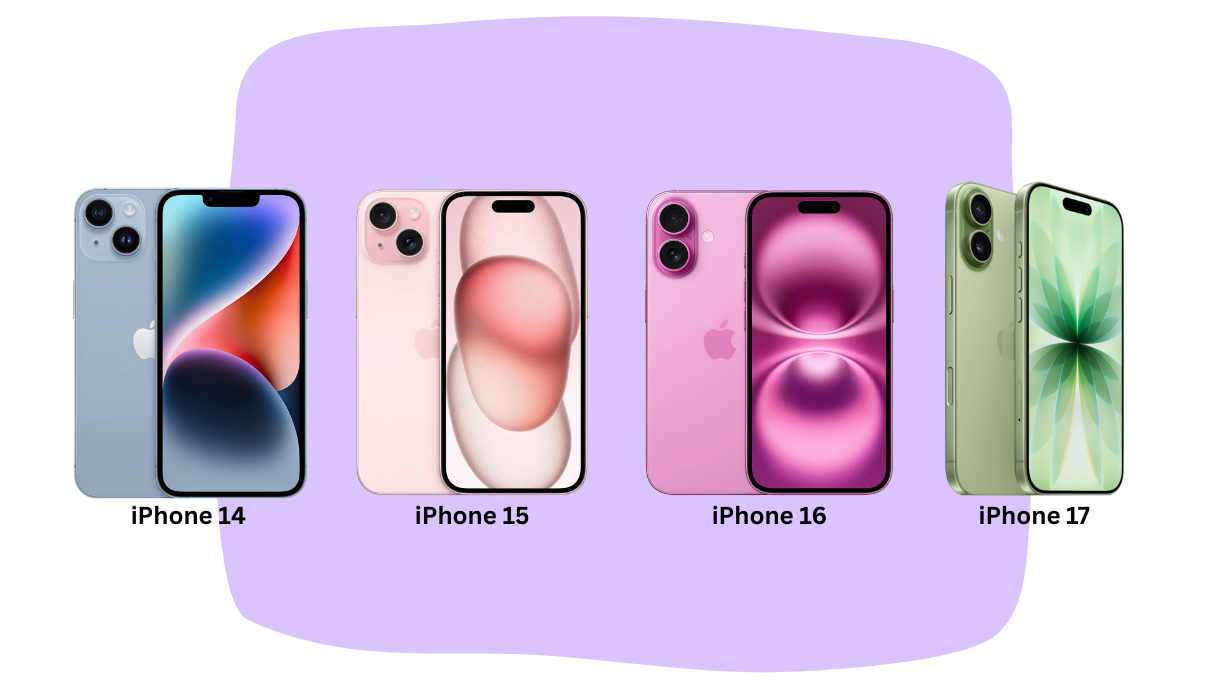
What’s New in the iPhone 17 Series
Design changes and durability
The iPhone 17 range shifts the design in a way you feel straight away. The frame is slimmer, roughly 0.8mm thinner than the iPhone 16, and the weight sits at around 188g for the iPhone 17, 198g for the 17 Pro, and 233g for the 17 Pro Max, so everything still feels comfortable in the hand even though the 17 Pro Max is around 6g heavier than the 16 Pro Max. Apple leans harder into its durable materials this year, with a 20–25% stronger Ceramic Shield and better scratch and drop resistance compared to earlier generations. The finish sits comfortably in the hand, especially on the standard 17, while the Pro and Pro Max models push the premium feel even further with refined textures and sturdier edges. For anyone upgrading from a 15 or earlier, the difference in durability is obvious from day one.
Display and resolution improvements
The iPhone 17 line brings brighter screens across all models. Here are the exact display specs:
| iPhone 17 | iPhone 17 Pro | iPhone 17 Pro Max |
|---|---|---|
|
6.1" 2532×1170 120Hz ~1,600 nits HDR ~2,000 nits peak |
6.1" 2556×1179 120Hz ProMotion ~1,900 nits HDR ~2,500 nits peak |
6.7" 2796×1290 120Hz ProMotion ~1,900 nits HDR ~2,500 nits peak |
Outdoor visibility is better, colours stay accurate in direct sunlight, and scrolling feels smoother thanks to Apple's tuning of the 120Hz refresh rate across the entire 17 line-up. Whether you are watching HDR content, gaming, or checking maps in bright daylight, the screens hold up in real-world conditions.
Processor and RAM boosts
Apple’s new A19 chip pushes the 17 series ahead of last year’s devices. Performance gains over the A18 are in the region of 20–25% faster CPU performance and around 30% faster GPU performance, with noticeable improvements in neural processing for AI-driven features. RAM also improves:
• iPhone 17: 8GB RAM
• iPhone 17 Pro / Pro Max: 12GB RAM
App load times drop, multitasking feels effortless, and demanding tasks such as editing video or running graphics-heavy apps show noticeably smoother frame rates. The improvement is most noticeable for users upgrading from a 15 or earlier, where the leap in speed feels immediate.
Battery performance and charging updates
Battery life increases across the 17 models:
• iPhone 17: ~20 hours mixed use
• iPhone 17 Pro: ~23 hours mixed use
• iPhone 17 Pro Max: 28–30 hours mixed use
Apple focuses on efficiency this year rather than raw battery capacity, so you get longer screen-on time with similar sized batteries to the iPhone 16 range. Charging is still handled via USB-C with around 20–30W wired charging speeds, and wireless charging remains available via MagSafe. The Pro Max holds the crown for all-day endurance, making it the go-to option for heavy users, commuters, and travellers.
Camera upgrades across the 17, 17 Pro and 17 Pro Max
This is the area where most people will notice the upgrade first, especially if you take a lot of photos at night or zoom in often. Camera improvements are where the 17 series stands out.
| iPhone 17 | iPhone 17 Pro | iPhone 17 Pro Max |
|---|---|---|
| 48MP main sensor | Larger 48MP main sensor | New 5×–10× variable periscope zoom |
| ~30 percent better low-light processing | Improved night stabilisation for video | ~40 percent less noise at long zoom |
| Sharper ultrawide shots | Faster, more accurate autofocus in mixed lighting | Best portrait and night performance in the line-up |
Across the board, you get richer colours, faster focusing, and more reliable portrait shots in challenging lighting conditions. If you often shoot indoors, at concerts, or while travelling, the 17 range cuts blur and noise in a way older models simply can’t match.
Best users for the iPhone 17 range
The 17 family is clearly split by use case, which makes it easier to pick the right one for how you actually use your phone.
iPhone 17: Everyday users who want a reliable upgrade without premium pricing.
iPhone 17 Pro: Creators, photographers, and anyone who wants more control over video.
iPhone 17 Pro Max: Power users, gamers, or anyone needing the best battery (around 30 hours) and the largest display (6.7").
If you are coming from a 14 or earlier, the jump feels significant. If you are on a 16, the difference depends on whether you value camera improvements, display brightness, and extra battery life.
iPhone 17 Models Compared
iPhone 17: everyday use and balanced performance
For most people, this is the default “new iPhone” choice – modern, fast, and not overkill. The iPhone 17 balances power and price. You get:
• 6.1" 120Hz display (2532×1170)
• A19 chip
• 48MP main camera
• ~20-hour battery life in mixed use
• 8GB RAM and 128GB–512GB storage options
It handles daily tasks smoothly, stays efficient, and sits comfortably as the value pick of the 17 generation.
iPhone 17 Pro: photography and video enhancements
If you care more about what comes out of the camera than the price tag, the 17 Pro is the sweet spot. The 17 Pro brings:
• 6.1" 120Hz ProMotion display (2556×1179)
• Larger 48MP sensor with better low-light performance
• Improved stabilisation for video
• 12GB RAM for better multitasking and pro apps
• ~23-hour battery life
• Higher storage ceilings, up to 1TB
This is the creator-focused model with noticeably faster on-device editing and more consistent results across photo and video.
iPhone 17 Pro Max: gaming, productivity and battery endurance
The Pro Max is the “no compromise” option – biggest screen, strongest chip, and the longest-lasting battery. The Pro Max pushes performance with:
• 6.7" 120Hz ProMotion display (2796×1290)
• A19 Pro-level performance and GPU gains
• The best battery in the range, around 28–30 hours
• 12GB RAM
• 5×–10× optical periscope zoom for long-distance shots
If you use your phone heavily every day, this is the most reliable option.
Price differences across the 17 line-up
Pricing mainly reflects how much screen, camera, and power you actually get. Prices scale by:
• Display size
• Camera hardware (especially the periscope lens on the Pro Max)
• A19 vs A19 Pro chip configuration
• RAM and storage options (128GB up to 1TB on Pro models)
Most users pick the standard 17 for value, while professionals naturally lean toward the Pro models.
iPhone 17 vs iPhone 16: What Actually Changed
Display and brightness changes
Side by side, the 17 looks a bit punchier and easier to read outside, even if the difference on paper feels small. The iPhone 17 series delivers noticeable brightness gains:
• iPhone 16 HDR brightness: roughly 1,600–1,800 nits
• iPhone 17 HDR brightness: roughly 1,600–1,900 nits
Outdoor peak brightness also improves:
• iPhone 16: ~2,000 nits
• iPhone 17: ~2,000–2,500 nits depending on model
And most importantly, the standard iPhone 17 now upgrades from 60Hz to a 120Hz display, matching the Pro models and making scrolling and animations feel noticeably smoother.
Chip performance and speed differences
If you game, edit video, or keep a lot of apps open, the A19 upgrade is very noticeable. A18 → A19 brings:
• Around 20–25% faster CPU performance
• Up to 30% faster graphics
- Faster AI-driven processing for photography and on-device intelligence
Heavy apps such as games, editing suites, and 3D tools feel smoother and more responsive.
Camera upgrades: lenses, stabilisation, low-light
This is where the 17 series really pulls away from the 16 in real-world shooting. Low-light photos are around 20–30% cleaner thanks to improved processing. Video stabilisation is visibly smoother, especially when walking or panning, and the Pro Max improves zoom from a fixed 5× system to a 5×–10× variable periscope, giving more flexibility for portraits and distant subjects.
Battery life and charging comparison
The 17 doesn’t reinvent charging, but it stretches each charge further. The iPhone 17 adds about 1–3 hours of extra battery life depending on model:
• iPhone 16 Pro Max: ~26 hours mixed use
• iPhone 17 Pro Max: 28–30 hours mixed use
Charging remains similar at roughly 20–30W wired, but is more consistent and efficient in day-to-day use.
Material and design differences
The design changes are subtle, but you do feel them in the hand. The 17 series redesigns the frame:
Slightly slimmer profile. Weight changes vary by model: most are a touch lighter, while the iPhone 17 Pro Max is about 6g heavier than the iPhone 16 Pro Max due to the new periscope camera hardware. Stronger Ceramic Shield and refined edges for better grip.
The Pro models feel more premium with upgraded materials and finishes.
Who should upgrade from a 16 to a 17
Upgrading from a 16 is less about chasing specs and more about whether the new features solve real problems for you. Upgrade if you value:
• Better low-light photography
• Improved zoom, especially on the Pro Max
• Smoother gaming at 120Hz on the standard 17
• Longer battery life
- Brighter outdoor display
If your 16 still performs well and you do not need the camera and display improvements, you can wait another cycle.
iPhone 16 vs iPhone 15: Practical Differences
Design tweaks and screen improvements
On paper these two look similar, but the 16’s screen is easier to live with day to day. Both models have a 6.1" screen, but brightness steps up on the 16:
• iPhone 15: roughly 1,000-1,600 nits brightness
• iPhone 16: roughly 1,200-2,000 nits brightness
The 16 handles outdoor conditions better, especially in strong sunlight.
Performance jump (chipset comparison)
If you keep phones for three or four years, the chip upgrade matters more than it seems. A16 → A18 brings:
• Around 20% faster overall performance
• Much better efficiency for battery life
• Smoother app switching and multitasking
Camera differences in real-world use
You won’t see a huge change on a spec sheet, but you will see it in tricky lighting. The iPhone 16 delivers:
• Better image processing and noise control
• More consistent ultrawide shots
• Improved low-light handling for both photo and video
• Battery performance compared
Typical mixed-use estimates:
• iPhone 15: ~17 hours
• iPhone 16: 18–20 hours
You get 1–2 extra hours depending on usage, which makes a difference on busy days.
Price drops and value positioning
With the 16 now established, the 15 typically receives discounts and becomes the value pick for budget-focused buyers, while the 16 positions itself as the sensible mid-range choice with better headroom for long-term ownership.
When the 16 is worth the extra money
If you want longer lifespan, better performance, and improved battery stability, the 16 is worth paying more for. If price is the priority, the 15 delivers strong value.
iPhone 15 vs iPhone 14: Best Value Options
Display and brightness
This is the point where older iPhones start to feel dated outdoors. Brightness and HDR jump between the 14 and 15:
• iPhone 14 HDR: ~1,200 nits
• iPhone 15 HDR: ~1,600 nits
• Outdoor peak on iPhone 15 rises to ~2,000 nits
The 15 is noticeably easier to read outdoors and gives punchier HDR video.
Performance differences (A-series chips)
A15 → A16 brings:
• Roughly 15% faster processing
• Smoother animations and scrolling
• Better long-term performance as apps get heavier
Camera upgrades and stabilisation
If you record a lot of video or shoot at night, the 15 is a clear step up from the 14. The 15 adds:
• Better stabilisation for video
• Around 20% improved low-light quality
• Sharper portrait photography with improved edge detection
Battery life and charging
Typical estimates:
• iPhone 14: ~16 hours mixed use
• iPhone 15: ~17 hours mixed use
USB-C replaces Lightning on the 15, making charging simpler if you already use newer accessories.
Pricing, deals and who should buy each
The 14 often sits at excellent prices and still performs well for casual users. The 15 is the better long-term buy thanks to battery, camera, and chip upgrades. If your main goal is value, the 14 remains strong. If you want a device that lasts a few more years comfortably, the 15 is the safer choice.
Full Model Comparison Table (17, 16, 15, 14)
Display, size and brightness
If screen clarity and smoothness matter, the newer you go, the better your experience. The 17 series leads with the brightest screens and full-range 120Hz.
Display and brightness quick view:
• iPhone 17 Pro Max: 6.7", ~1,900 nits HDR, ~2,500 nits peak, 120Hz
• iPhone 17 Pro: 6.1", ~1,900 nits HDR, ~2,500 nits peak, 120Hz
• iPhone 17: 6.1", ~1,600 nits HDR, ~2,000 nits peak, 120Hz
• iPhone 16 Pro Max: 6.7", ~1,800 nits HDR, ~2,000 nits peak, 120Hz
• iPhone 16: 6.1", ~1,600 nits HDR, ~2,000 nits peak, 60Hz
• iPhone 15: 6.1", ~1,600 nits HDR, ~2,000 nits peak, 60Hz
• iPhone 14: 6.1", ~1,200 nits HDR, ~1,200 nits peak, 60Hz
Cameras and photography features
From 14 to 17 Pro Max, each step adds more flexibility – better night shots, stronger zoom, and smoother video.
• 17 Pro Max leads with periscope zoom (5–10×)
• 17 Pro excels in all-round video and stabilisation
• 16 improves processing and low-light handling
• 14 offers the most basic but reliable setup for everyday shots
Battery ratings
Approximate mixed-use estimates:
| iPhone Model | Battery life |
|---|---|
| 17 Pro Max | 28–30 hours |
| 17 Pro | ~23 hours |
| 17 | ~20 hours |
| 16 Pro Max | ~26 hours |
| 16 | 18-20 hours |
| 15 | ~17 hours |
| 14 | ~16 hours |
Chipset and performance
• A19 (17 series)
• A18 (16 series)
• A16 (15 series)
• A15 (14 series)
Each generation lifts performance and efficiency, so newer chips handle heavy apps and future iOS updates better.
Storage options and RAM
All models start at 128GB, with Pro models going up to 1TB.
RAM:
• iPhone 14: 6GB
• iPhone 15: 6GB
• iPhone 16: 8GB
• iPhone 17: 8GB (12GB on Pro and Pro Max)
How to Choose the Right iPhone for Your Needs
Best iPhone for photography
The iPhone 17 Pro and 17 Pro Max stand miles ahead thanks to their larger 48MP sensors, improved stabilisation, and the Pro Max’s 5–10× periscope zoom. If your camera roll is full of night shots, travel pictures, and video clips, these are the ones that will actually change how your photos look.
Best for gaming and performance
The 17 Pro Max, with its A19 Pro-level GPU, 120Hz 6.7" display, and around 30-hour battery, is the clear performance leader. It handles long sessions of graphically intense games without dropping frames or draining the battery too quickly.
Best for battery life
The 17 Pro Max remains the endurance champion, followed by the 17 Pro and 16 Pro Max. If you are tired of living next to a charger, these three make the biggest difference.
Best value for money
The iPhone 16 delivers the best overall balance of price, performance, and longevity, while the 15 offers great performance at a lower price. If you want something that feels modern now and still comfortable in three years’ time, the 16 is the safest bet.
When it’s worth upgrading
Upgrade if your current phone struggles with any of the following. If you’re ready to sell your old iPhone and upgrade, consider these factors:
• Battery life
• Low-light photography or zoom
• Performance-heavy tasks like gaming or editing
If you own a 14 or earlier, any jump to the 16 or 17 will feel significant in day-to-day use.
Planning for long-term ownership and resale value
Newer models hold their value longer. The 17 and 16 lines will stay supported for years, making them strong picks if resale matters. Older models still resell well, especially if kept in good condition. If you plan ahead, choosing a 16 or 17 now makes it easier to get a stronger payout when you eventually decide to sell your phone.
Ready to upgrade? Sell your device with Vendi
You can:
• Get an instant quote online for your current phone
• Ship for free with £10 postage paid by us
• Receive same-day payment once we verify your device’s condition using AI-driven checks
• Use your payout to put money towards your next iPhone and make the upgrade feel easier
Sell your phone with us today, give your old device a second life, and put the cash straight into your next upgrade. Whether you’re selling an iPhone 14, iPhone 15, iPhone 16, or iPhone 17, we make the process simple and fast.
Sell your device
Sell your preloved devices instantly at the best price on the market with same-day payment!
Sell Now